Arbitrage As Plumbing: One Price
Our Mission
Our mission is to give every tokenised stock one price¹ by turning arbitrage into public plumbing²: one transaction, no capital, open to anyone³.
The Same Stock, Many Prices
A stock token on Robinhood Chain does not trade in one place. NVDA, GLD, SPY and the rest each sit in several Uniswap v3 pools at once: against USDG, a dollar, and against WETH, at fee tiers of 0.01, 0.05, 0.30 and 1.00%. Every pool keeps its own price, and nothing ties them together.
A scan of every pool on Sep 18, 2026 found 49 stocks trading in 136 live pools, with gaps between a stock's own pools of 1 to 101 basis points⁴. It is the same token in every pool, backed by the same share. That should tell us something: the gap is not news about the company. It is a leak in the plumbing.
Horseless Carriages
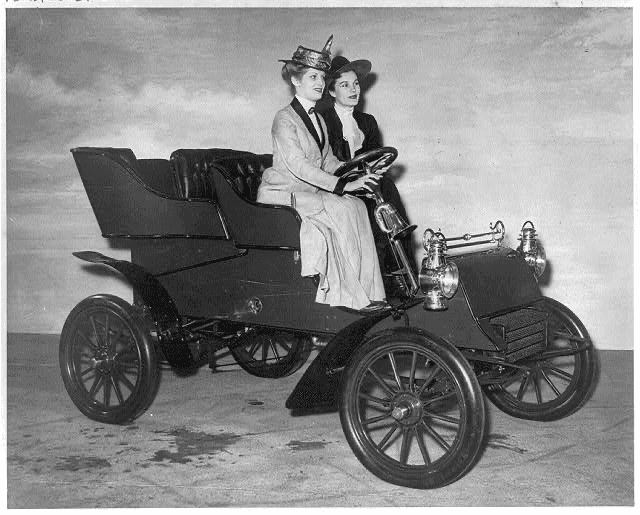
Early cars were built as horseless carriages: the familiar carriage with a motor where the horse had been, down to the high seat and the whip socket. New technology usually arrives in the shape of the thing it replaces before it finds its own form.
Tokenised stocks arrived the same way. The share moved on chain, but the market around it arrived as a set of separate venues, each pool its own small exchange⁵. Off chain, venues are wired together by brokers that route to the best price and by desks that lean on any quote that strays. On chain, the wiring is missing.
So every trade moves one pool and leaves the others behind. A buyer lifts the USDG pool and the WETH pool never hears of it. ETH moves, and every WETH pool reprices while the USDG pools stand still. A new listing opens as a one-sided position at the price it was placed, and stays there until somebody trades it⁶.
Arbitrage is the wire. Buy where the stock is cheap, sell where it is rich, and the two prices meet.
This is the opportunity: arbitrage as plumbing, not as a private trade.
Open By Default
Today, closing a gap takes things most people do not have: capital parked on both sides, a bot watching every block, and the patience to split one idea into three transactions. So the gaps are either left open, or closed by a few who keep the whole spread.
A flash cycle removes all three. The engine takes the first leg from the cheap pool itself, sells in the rich pool, pays the first pool back from the proceeds and keeps what is left. It all happens inside one transaction, so there is nothing to fund and nothing to hold⁷. The caller pays gas and nothing else.
Safety is what makes it public. A cycle that does not end in profit reverts, so the worst case is the gas of a failed transaction. The quote is an eth_call anyone can make against live pool state before anyone signs. The engine only touches canonical Uniswap v3 pools and real Robinhood stock tokens, and it holds nothing between transactions. When the rules are this small, anyone can check them, and anyone can run them.
A Plan For One Price
We are building the pipe in three steps:
Step One
The engine is live: a flash cycle over two to 4 pools that pays its caller 90% of the profit and takes nothing on a loss⁸.
Step Two
The scan and the quote are in the open: anyone can see every gap and its exact size before they run it, in the app and on the oracle page.
Step Three
Hand the pipe to everyone, people, bots and keepers alike, until every stock on the chain trades at one price.
Every Stock, One Price.
Appendix:
- One price within the fees of its pools. A gap smaller than the fees on its path is not an arbitrage, so it stays. See Inside The Fee Band.
- Plumbing: a public function anyone can call and nobody has to babysit, that does one thing and reverts when it cannot.
- No allow list, no account, no deposit. The engine is a contract; the app is one way to call it.
- A scan of every live pool on Sep 18, 2026. A pool counts as live when both of its sides hold at least $200. The app reads the same pools live, every few seconds.
- Uniswap v3 pools are separate contracts. Each prices its own reserves along its own curve and never reads another pool.
- A one-sided position holds only the stock, placed in a price range above the market, so it can only sell. See Why Stocks Drift.
- The engine swaps with the first pool and pays it last, from inside that pool's own callback. The first pool lends the first leg for the length of the transaction.
- The protocol keeps 10% of the profit, never a share of the size. The contract caps the fee at 20%.